
Why Hybrid Tulips Vanish and Botanical Species Endure
Few spring disappointments are more familiar than a bed that looked magnificent in its first season and then produced only narrow green leaves the following year. Many large Dutch hybrid tulips are bred for dramatic color, long stems, enormous flowers, and dependable performance as newly purchased bulbs. Their strength is often concentrated in that first display. After flowering, the replacement bulb may be too small to produce another substantial bloom, especially where summers are wet, winters are mild, or foliage is removed before it has finished feeding the bulb.
Botanical tulips follow a different pattern. Species such as Tulipa clusiana, Tulipa tarda, and Tulipa humilis remain closer to the plants shaped by wild landscapes. Their flowers are often smaller, but the bulbs are adapted to persist, divide, and return where soil drains quickly and summer dormancy stays dry. For gardeners planning reliable perennial tulip displays, the essential change is to plant for repeat performance rather than a single spectacular season. Give these bulbs conditions that resemble their origins, and spring color can gradually develop into a self-sustaining carpet.
Evolutionary Origins on the Arid Steppes of Central Asia
Wild tulips evolved across regions where the growing year is sharply divided. Many species come from rocky slopes, montane steppes, open valleys, and dry grasslands extending through Central Asia, while others are associated with Mediterranean climates. These are not places of continuously moist, richly amended borders. Winter and early spring may bring cold rain or melting snow, allowing the bulb to establish roots and produce leaves. As temperatures rise, the soil surface dries, grasses yellow, and the bulb retreats below ground through a hot, dormant summer.
This seasonal rhythm explains much of their reliability. Botanical tulips typically need a cold period to organize spring growth, bright light to build a sturdy plant, and excellent drainage after the foliage fades. The bulb is protected underground while its leaves gather energy, then rests when summer heat and drought arrive. A garden bed that holds moisture through July offers the opposite conditions. Even if the spring flowers are excellent, persistent dampness can weaken roots, encourage fungal disease, and eventually rot the bulb.
Rich soil is not automatically healthy soil for tulips. Heavy clay, thick organic amendments, frequent summer irrigation, and compacted planting areas can create a wet pocket around dormant bulbs. Standard hybrid tulips may also decline because their oversized flowers demand considerable stored energy, while their replacement bulbs often fail to mature fully. Botanical species are not indestructible, and they still need sensible planting, but their smaller scale and natural vigor make them better candidates for long-term naturalizing.
- Cold winters support root development and reliable spring emergence.
- Free-draining soil prevents bulbs from sitting in stagnant moisture.
- Full sun helps leaves recharge the bulb after flowering.
- Dry summer dormancy reduces the risk of rot and premature decline.
Three Resilient Botanical Species for Everlasting Spring Color
Choosing several species extends the season and adds variation in height, color, and flower form. Tulipa clusiana, commonly called Lady Tulip, is an early spring perennial with gray-green, linear leaves and slender stems. Its narrow buds open into white to cream flowers edged in carmine or dark pink, with a purple basal marking and purple stamens. In strong sunlight, the flowers open widely into starry shapes; at night and during cloudy weather, they close again. Native to Afghanistan, Iran, Iraq, Pakistan, and the western Himalayas, it is well suited to a sunny, sharply drained planting in USDA Zones 3 through 7.
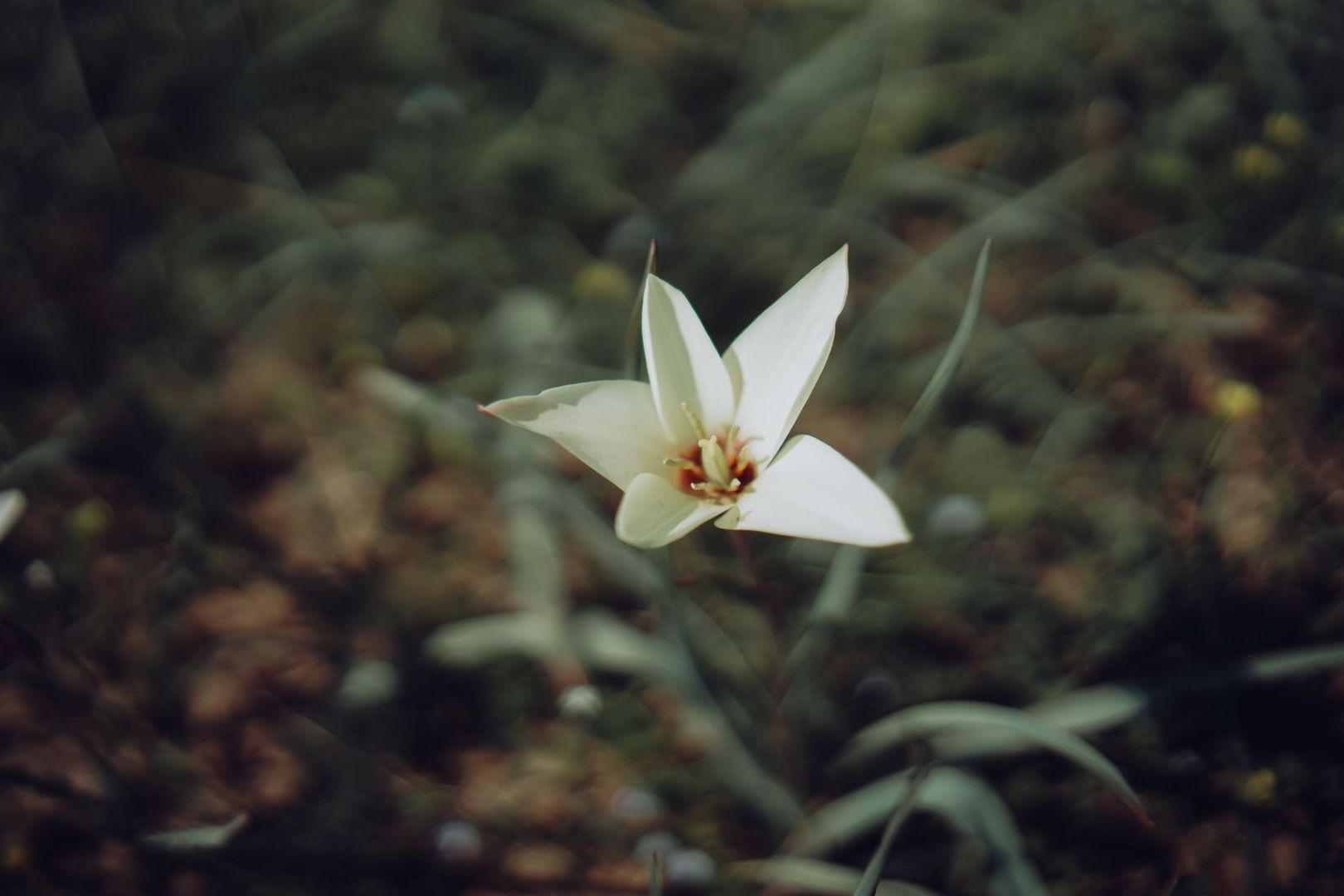
Tulipa tarda provides a very different effect. At roughly 4 inches tall, it stays close to the ground and forms expanding clusters when planted in groups. Each flower combines a clear white rim with a bright yellow center, producing the appearance of small stars scattered across gravel or a rock garden. It generally flowers in early to mid spring, often during March and April depending on climate. Its low habit makes it useful along paths, at the front of borders, in containers, or beneath deciduous shrubs where spring light is plentiful and summer shade helps keep surrounding plants from competing during dormancy.
Tulipa humilis is among the earliest and most compact choices. Its ground-hugging cups may appear in late winter or early spring, often in shades of magenta, violet, rose, or related soft tones. The flowers suit a rock garden, raised trough, alpine bed, or sunny gravel pocket where taller tulips would look out of scale. Like the other species, it is most effective when planted in colonies rather than as isolated specimens. Allow several seasons for the clump to settle, divide, and begin to look naturally established.
| Species | Approximate height | Typical bloom period | Garden character |
|---|---|---|---|
| Tulipa clusiana | Slender, medium-height stems | Early spring | White and carmine starry flowers with elegant vertical form |
| Tulipa tarda | About 4 inches | Early to mid spring | Prolific yellow and white stars in low, spreading clusters |
| Tulipa humilis | Miniature and ground-hugging | Late winter to early spring | Small cups in magenta, violet, and soft rose |
Replicating Rocky Scree Beds and Sharply Drained Soil
Begin with a drainage assessment before ordering bulbs. After heavy rain, observe how long water remains on the proposed site. If puddles persist, improve the bed before planting rather than hoping the bulbs will tolerate the problem. In clay soil, create a raised planting area or use a sloping rock garden. Incorporate coarse grit, crushed pumice, or small gravel through the planting zone, and avoid creating a fine-textured pocket surrounded by dense clay. The goal is a continuous route for water to move away from the bulbs.
Species tulips are petite, but they should not be treated as shallow-rooted annuals. Follow the supplier”s guidance, because bulb size and local conditions vary. Tulipa clusiana, for example, is commonly planted about 6 to 8 inches deep and spaced 4 to 5 inches apart. Smaller species can often be planted at a depth of roughly two to three times the bulb”s height, with enough soil above the bulb to buffer temperature changes. Conventional Darwin hybrids are frequently planted deeper and farther apart, so do not automatically apply their measurements to miniature species.
Site selection is as important as soil texture. A south-facing slope warms early and sheds rain quickly, while a gravel path edge offers the open, lean conditions many species prefer. Rock gardens and raised beds are naturally useful, provided irrigation does not remain active through summer. Deciduous tree canopies can also work well because they admit abundant light in early spring, then provide partial summer shade. Avoid dense evergreen shade, lawn areas that receive regular irrigation, and low spots where cold, wet air and water collect.
- Choose a sunny or spring-bright site and test how quickly it drains after rain.
- Raise or reshape wet ground, then blend coarse grit, pumice, and gravel through the root zone.
- Plant healthy bulbs in autumn, using the recommended depth for the species and allowing space for clump expansion.
- Water after planting if the soil is dry, then let seasonal rainfall provide most moisture until active growth begins.
- Reduce summer irrigation once the foliage has naturally disappeared, and inspect dormant areas for signs of rot or standing water.
Designing Effortless Drifts and Perennial Partnerships
Naturalizing looks most convincing when planting avoids rigid rows. Scatter bulbs loosely across a prepared area, then plant them where they land, using larger groups and occasional gaps to imitate a naturally established colony. For a strong first impression, plant more bulbs than would be used for a formal accent. Tulipa tarda is particularly effective in generous clusters, while Tulipa clusiana can be threaded through gravel, low edging, or an open border. Repeated groups help the eye connect separate colonies into one spring composition.
Companion plants should respect the tulip”s seasonal timetable. Creeping thyme, sedums, low alpine perennials, and other drought-tolerant plants can fill space without demanding frequent summer water. Keep vigorous ground covers from smothering the foliage in spring, and leave enough open soil for the leaves to receive direct light. After flowering, remove only the faded flower head if seed production is not desired. The leaves must remain in place until they yellow and collapse naturally, because photosynthesis replenishes the replacement bulb. In suitable locations, allowing seed pods to mature can encourage gradual self-sowing, although seedlings may take several years to flower.
- Plant informal sweeps rather than isolated bulbs or straight lines.
- Use low, drought-tolerant companions that will not require summer irrigation.
- Remove spent flowers only when seed formation is unwanted.
- Never braid, cut, or remove healthy foliage while it is still green.
- Divide crowded clumps after the foliage has died back, if flowering becomes weaker.
Cultivate a Self-Sustaining Spring Tapestry That Returns for Decades
Wild species tulips offer a quieter kind of beauty, but their value increases with every returning season. Their flowers may be smaller than those of exhibition hybrids, yet the colors are often clearer, the forms more graceful, and the plants better suited to a permanent planting. When established in dry, sunny, well-drained ground, they can multiply into colonies that require little disturbance. Their compact growth also makes them useful in rock gardens and small landscapes where tall stems would appear out of proportion.
The most reliable results come from respecting the bulb”s full cycle, from autumn planting and winter chilling through spring flowering, leaf maturation, and dry summer dormancy. Select sound bulbs, set the bed up well, avoid soggy soil, and protect next season”s bloom by preserving the foliage. Plant these botanical treasures in autumn, then let cold weather, spring light, and careful drainage do their work. With patience, the reward is not an annual replacement cycle but a living spring tapestry that returns with increasing character from bulb to bloom.