
Embracing the Golden Decline in the Spring Border
There is a brief, awkward interval in every tulip border when the flowers have finished their display but the leaves remain green, floppy, and increasingly untidy. The crisp color of spring has gone, yet the foliage is not ready to leave. This is the golden decline of the border, a necessary pause between bloom and dormancy. With thoughtful planting, it can become almost invisible. Broad-leaved perennials rise around the tulips, softening their fading stems and carrying the bed gracefully into summer.
The temptation to cut, pull, braid, or tie the leaves is understandable, but early tidying can weaken the bulb beneath the soil. Tulip foliage is still working after flowering, converting sunlight into stored energy for future growth. The better approach is to design the border so that companion plants take over the visual work while the tulip leaves complete their biological work. This is the essence of a seamless fade, where plant architecture, seasonal timing, and careful spacing allow the garden to change without appearing to lose momentum.
The Vital Photosynthetic Engine Beneath Dying Leaves
Once tulip petals fall, the leaves become the bulb”s remaining source of energy. Through photosynthesis, they manufacture carbohydrates and move those reserves underground. The bulb uses this stored food to develop future flower structures and maintain its strength through dormancy. The flower stalk can be removed after bloom if desired, particularly to prevent energy being diverted into seed production, but the green leaves should remain intact.
Dieback is gradual rather than immediate. Depending on tulip type, weather, soil, and growing conditions, foliage commonly remains active until late June or early July. It may first lose its upright shape, then turn yellow, and finally become brown and dry. The safest rule is simple: wait until the leaves have fully matured and can be removed with little resistance. The guidance on when tulip foliage can be removed explains that brown, naturally dead foliage may then be cut at ground level without reducing the bulb”s recharge period.
Removing leaves while they are still green can reduce bulb vigor and size, leading to fewer flowers or blind bulbs the following spring. Even if a display returns, it may become smaller, less uniform, or dominated by foliage rather than bloom. A companion planting plan protects the appearance of the border during this waiting period. As the tulip leaves fade, the expanding crowns of hostas, geraniums, or lady”s mantle can cover the lower stems without interfering with the upper leaves that still need sunlight.
- Remove spent flower heads after flowering if seed production is not wanted.
- Leave green leaves undisturbed, even when they begin to flop.
- Allow foliage to turn completely brown before cutting it at soil level.
- Mark the planting area so late spring cultivation does not damage dormant bulbs.
- Use companion foliage to hide the decline rather than restricting the leaves.
Why Perennial Camouflage Beats Shearing and Braiding
Tying tulip leaves into knots, fastening them with rubber bands, or braiding them into narrow bundles may make a bed look tidier for a short time, but these methods reduce the leaf surface exposed to light. They can also crease or damage the foliage, slowing the very photosynthesis needed to restore the bulb. The cleanest solution is not to manipulate the leaves, but to place plants nearby that naturally occupy the space as the tulips decline.
It is also important to keep expectations realistic. Many large-flowered hybrid tulips are not reliably perennial in every garden. Their performance depends on cultivar, bulb quality, planting depth, drainage, summer conditions, and the amount of energy the original bulb used to produce its flower. Research discussed by Ask Extension notes that tulips generally rebloom less reliably than narcissus, and that even well-planted groups may decline after their first impressive season. Species tulips and selected perennializing varieties often offer better repeat performance, but no companion planting can compensate for waterlogged soil or unsuitable varieties.
Layered planting solves the aesthetic problem while respecting these biological limits. The tulips provide early color, then perennials expand into the same visual space as the bulb foliage matures. This creates a seasonal handoff rather than a forced transition. It also allows the gardener to evaluate which tulips truly return, because the surrounding planting remains attractive whether the following spring brings a full display or a lighter one.
The Best Broad-Leaved Partners for Strategic Masking
Hostas are among the most effective partners for tulips in cool, partly shaded borders. They often emerge just as late tulip petals are falling, and their leaves continue enlarging through the weeks when tulip foliage becomes less presentable. Blue, green, and gold-leaved forms provide different effects, while their broad surfaces conceal lower stems without creating a dense tangle immediately at bulb emergence. Choose hostas with a mature size suited to the bed, since an oversized crown can eventually dominate or make bulb maintenance difficult.
Cranesbills, or hardy geraniums, offer a softer form of camouflage. Their spreading mounds and divided foliage weave among tulip stems, disguising gaps while preserving a light, textured appearance. Lady”s mantle, Alchemilla mollis, is especially useful where lime-green foliage suits the color scheme. Its scalloped leaves catch droplets and its airy sprays rise above the mound, drawing attention away from yellowing bulb leaves. Both plants can provide a long season of foliage, but their spread should be monitored so that they do not smother smaller bulbs or crowd the border”s edges.
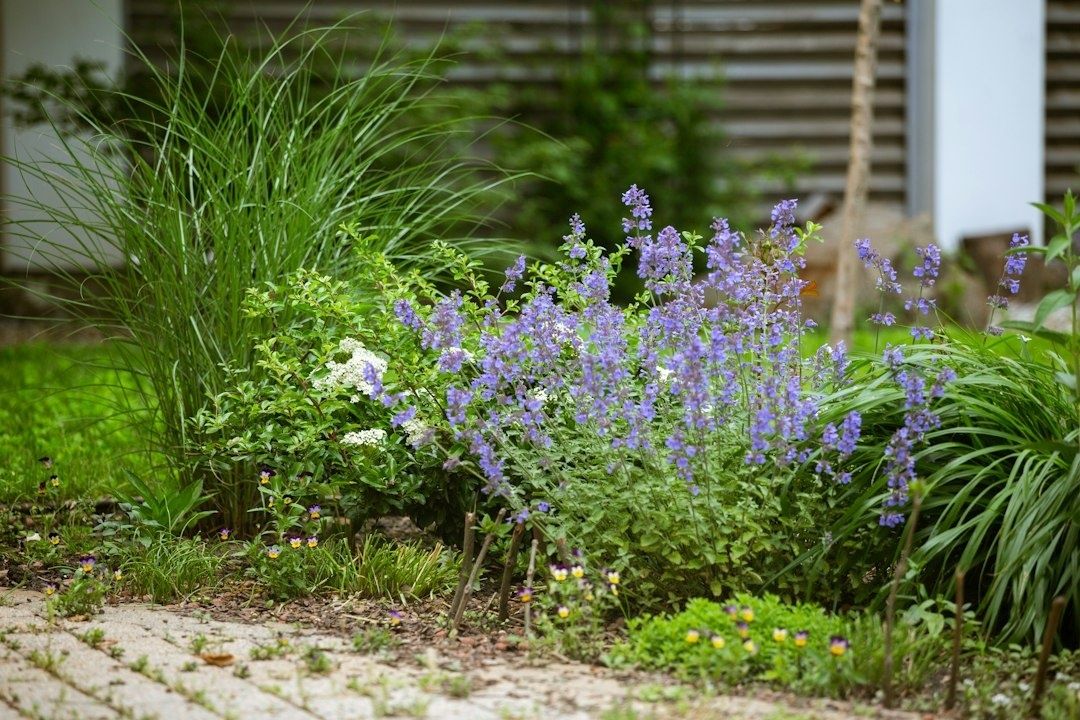
In moist, woodland-fringe conditions, bleeding hearts and Brunnera create a natural succession. Bleeding hearts bring early flowers and soft, divided foliage, while Brunnera forms broad, heart-shaped leaves that remain effective after its small spring flowers pass. These combinations work best where the soil is fertile, moisture-retentive but well drained, and protected from severe afternoon heat. In brighter borders, other later-growing companions such as catmint, daylilies, bee balm, or large geraniums can provide the same visual service, provided their mature height and root competition are considered.
| Companion | Best setting | Camouflage quality | Design note |
|---|---|---|---|
| Hosta | Part shade and moisture-retentive soil | Broad, architectural leaves | Match mature crown size to bulb spacing |
| Hardy geranium | Sun to partial shade, depending on cultivar | Spreading, finely textured mounds | Useful for weaving between stems |
| Lady”s mantle | Sun or light shade with reliable moisture | Dense scalloped foliage | Lime-green leaves brighten fading borders |
| Brunnera | Cool woodland and woodland-edge beds | Heart-shaped leaves | Particularly effective with blue or white tulips |
| Bleeding heart | Moist, sheltered partial shade | Fine foliage and expanding crowns | Provides early-season transition |
Planting Mechanics and Layered Garden Choreography
Successful camouflage begins underground. Tulips are commonly planted about 6 to 8 inches deep, with the pointed end upward, though the precise depth should follow the bulb size, local climate, and supplier guidance. Deep planting helps anchor stems and places the bulb below the main zone of routine surface disturbance. Perennials should not be forced directly through bulbs. Instead, position them between bulb groups or slightly behind them, leaving enough room for the perennial crown to expand without requiring frequent division.
Spacing requires a balance between immediate coverage and future growth. A new perennial may look too small to hide anything during its first season, but mature plants can quickly occupy a much wider area. Allow air movement around both tulips and companions, particularly in regions with wet springs. Good drainage is essential, because bulbs sitting in saturated soil are more vulnerable to rotting and poor performance. Compost can improve structure when incorporated appropriately, but avoid creating a rich, water-holding pocket around individual bulbs.
- In autumn, mark the border”s light, drainage, and moisture patterns before choosing companions.
- Plant tulip bulbs at the appropriate depth, generally 6 to 8 inches, and space groups closely enough for a strong spring display without overcrowding.
- Place larger perennials behind or between bulb groups, keeping their future crown size in mind.
- Install smaller companions in gaps, but avoid deep digging directly over planted bulbs.
- Water the bed thoroughly after planting when conditions are dry, then maintain even moisture without leaving the soil soggy.
- In spring, allow tulip foliage to remain while companion plants expand around it.
- Remove tulip foliage only after it has turned completely brown and separates naturally, then leave the perennial canopy to carry the border into summer.
Autumn is the ideal time to establish this choreography because bulbs and many hardy perennials can settle before winter. If a perennial must be planted in spring, use a shallow planting hole where possible and work carefully around emerging bulbs. Shallow-rooted annuals can also be added later as temporary cover, but permanent companions provide a more dependable structure from year to year. In containers, tulips offer another practical option: the pot can be moved from a prominent position after flowering, although the foliage should still be allowed to mature before removal.
Cultivate a Garden That Gracefully Hides Its Own Seams
A well-designed tulip border does not divide the year into rigid stages of bloom, mess, and cleanup. It allows one layer to recede while another gathers strength. Tulip leaves quietly restore the bulb beneath the soil, while hostas unfurl, geraniums spread, lady”s mantle catches the light, and woodland companions fill the spaces left by spring flowers. The result is not concealment through disguise, but continuity through careful succession.
Patience is part of the planting design. Give the foliage time to finish its work, choose companions that match the site, and allow each plant enough room to reach its intended form. Healthy bulbs reward careful planting, sound drainage, and respectful aftercare. By summer, the border can appear fully settled, while beneath the lush foliage the next spring”s display is being prepared quietly, one stored reserve at a time.