
Moving Beyond the Ephemeral Spring Tulip Flush
A tulip border can be spectacular and still feel disappointingly brief. When every bulb belongs to the same early or mid-season group, the garden may deliver one concentrated fortnight of color, followed by broad stretches of soil and fading foliage. The problem is rarely a lack of bulbs. More often, the planting has been designed as a single event rather than as a sequence from bulb to bloom.
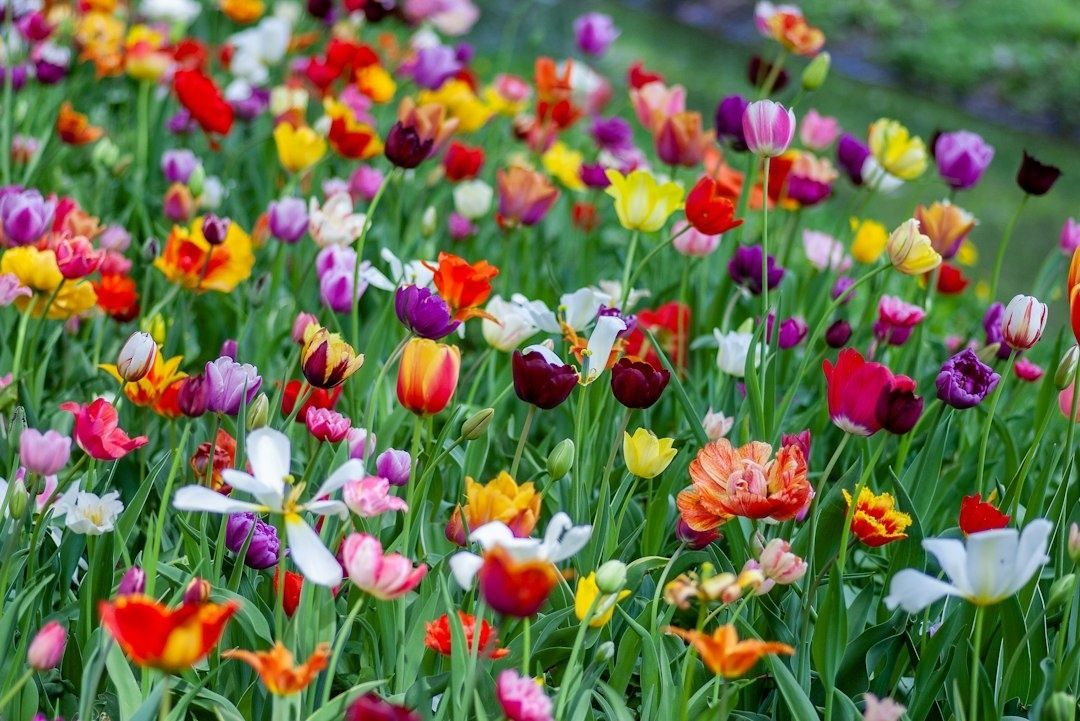
The 15 tulip divisions offer a practical solution. Their differences in parentage, flower form, stem height, and response to spring temperatures make them useful chronological design tools, not merely catalog classifications. A well-planned border combines early botanical and Fosteriana tulips with mid-season Triumphs and Darwin Hybrids, then hands the display to Double Lates, fringed cultivars, and Viridifloras.
With suitable companions and thoughtful spacing, that succession can stretch from late March through mid-May, depending on climate and local exposure. The aim is not to force every bulb to flower on a precise date, but to create overlapping waves in which one group is opening as another reaches its peak and a third is preparing beneath emerging perennial foliage.
The Horticultural Framework of Tulip Divisions and Timing
Tulips generally spend far longer preparing underground than flowering above ground. Dormant bulbs need a cool period for root development and flower-bud formation, followed by several weeks of visible spring growth. Soil temperature, planting depth, drainage, sunlight, winter duration, and spring weather all influence the final date. In colder climates, natural winter chilling usually supplies what bulbs need. In warmer regions, pre-chilling may be necessary for reliable flowering.
For border design, the divisions can be grouped broadly into three working windows. The early group includes Single Early, Double Early, Kaufmanniana, Fosteriana, and Greigii tulips. Triumph and Darwin Hybrid tulips form the principal mid-season canopy, while Single Late, Lily-Flowered, Fringed, Viridiflora, Parrot, and Double Late tulips generally extend the display toward May. Actual timing varies, so these categories should be treated as overlapping ranges rather than rigid appointments.
- Early window: botanical, Kaufmanniana, Greigii, and Fosteriana or Emperor tulips.
- Middle window: Triumph and Darwin Hybrid tulips, with some Greigii cultivars overlapping.
- Late window: Double Late, Fringed, Viridiflora, Parrot, Lily-Flowered, and Single Late tulips.
Wild species and their close selections are usually shorter, more delicate in scale, and better suited to rock gardens, front edges, and naturalistic pockets. Hybridized cultivars tend to offer larger flowers, stronger color blocks, and taller stems, although some are less reliable in returning after the first season. Gardeners who want to understand the divisions in greater detail can consult Types of Tulips for Home Gardens from Iowa State University Extension.
Weeks One and Two with Early Botanical and Fosteriana Species
The first movement begins with tulips that respond quickly as winter loosens its grip. Tulipa kaufmanniana and related botanical selections often produce starry or gently open flowers close to the ground, while Fosteriana, also known as Emperor tulips, brings larger elongated blooms to the early border. These bulbs commonly stand between 8 and 14 inches in a designed front edge, although individual Fosteriana cultivars can grow taller.
Low stature is a practical advantage in March and early April. Short stems are less exposed to strong winds, sudden temperature changes, and the rough weather that can flatten taller flowers. Their foliage may also carry useful markings, including gray-green tones or mottling, adding interest before and after flowering.
- Plant early tulips along paths, bed edges, and the front of a mixed perennial border.
- Use botanical types in rock gardens where their scale will not be overwhelmed.
- Place Fosteriana selections beneath deciduous trees where spring light is generous before the canopy closes.
- Group bulbs in pockets rather than scattering single specimens, allowing each color to read clearly from a distance.
These groups can perennialize more successfully than many modern showpiece tulips when planted in full sun and well-drained soil. Species tulips are especially useful where a naturalizing effect is desired. They may not provide the immense flowers of later hybrids, but they establish the first crisp notes of the season and make the border feel active before most herbaceous perennials have fully emerged.
Weeks Three Through Five Featuring Mid-Season Darwin Hybrids and Triumphs
As early tulips fade, the border should rise in scale. Triumph tulips provide sturdy stems and a classic goblet shape, while Darwin Hybrids deliver some of the largest and most commanding flowers in the spring garden. A canopy between approximately 20 and 26 inches works well in many borders, although some Darwin Hybrids may reach close to 30 inches in favorable conditions.
This middle phase is the structural heart of the display. Strong reds, saturated pinks, clear yellows, oranges, and whites can be arranged as a deliberate handoff from the cooler violets and soft colors of the early weeks. Avoid placing every tall cultivar in a single rigid band. Instead, repeat two or three colors through the border, using taller stems behind emerging foliage and shorter Triumphs nearer the path.
Darwin Hybrids are among the better choices when repeat performance matters. They may rebloom for several years under favorable conditions, particularly when bulbs are planted deeply in fertile, well-drained soil and allowed to retain healthy foliage after flowering. This does not make every cultivar permanently perennial. Heat, summer moisture, overcrowding, disease, and premature leaf removal can all reduce return performance.
- Use Darwin Hybrids for the strongest blocks of mid-season color.
- Use Triumphs to bridge the height and timing gap between early and late groups.
- Allow enough space for air movement around foliage, especially in wet spring climates.
- Repeat selected colors at intervals so the border reads as one composition rather than three unrelated collections.
Recent RHS trials assessed Darwin Hybrid, Single Late, Viridiflora, and multi-stemmed entries for vigor, sturdiness, flowering duration, weather response, and overall garden performance. The trial also noted strong performance from cultivars such as “Flaming Memory” and “Blushing Lady” during windy conditions, with flowering lasting around three weeks in that season. Such results reinforce the value of choosing for garden behavior, not flower photographs alone.
Weeks Six Through Eight with Luxurious Double Lates and Viridifloras
The final phase brings a more sumptuous character. Double Late tulips, often called peony-flowered tulips, open with layered petals that resemble small peonies. Fringed cultivars add a crystalline edge, while Viridifloras hold green flushes through their petals, giving the late border a distinctive architectural quality. These forms are particularly effective when the earlier tulips have already established the main color framework.
Double Late tulips commonly reach about 18 to 22 inches and are well suited to the late-April portion of the sequence. A blend may include soft pink, cream, yellow, lavender, and burgundy tones, but the most successful combinations usually repeat one linking color. Pale Double Lates can illuminate a border in cool weather, while darker varieties provide depth against fresh green perennial growth.
Late tulips should not be left visually unsupported. By this point, hostas, cranesbill geraniums, brunnera, ornamental grasses, and other perennials are producing substantial leaves. Their foliage can conceal yellowing tulip stems while framing the flowers at their peak. Viridiflora blooms are especially effective against broad blue-green or silver foliage because the green petal markings become part of the wider foliage composition.
- Place heavy doubles where nearby plants or a wall can provide shelter from prevailing winds.
- Avoid exposed locations that collect rainwater on fully open flowers.
- Use sturdy supports discreetly if a particularly large-flowered cultivar begins to lean.
- Plant late tulips among emerging perennials, but leave enough air circulation to reduce prolonged wetness.
Late spring showers can bruise or collapse double flowers. Good drainage is essential, and a site with morning sun helps foliage and flowers dry promptly. The RHS notes that tulips generally prefer full sun, organic-rich soil, cool moist spring conditions, and a warmer, drier summer dormancy. That seasonal rhythm is especially important for late cultivars, which must flower cleanly before heat and humidity accelerate decline.
The Eight-Week Border Choreography Matrix
The following matrix offers a planning framework rather than a fixed calendar. Local weather may move flowering earlier or later, and a south-facing bed can run ahead of a shaded or wind-exposed border. The value lies in the overlap: each group should remain visible while the next group is beginning to open.
| Weeks | Primary tulip groups | Approximate height | Useful companions |
|---|---|---|---|
| 1 to 2 | Kaufmanniana, botanical species, early Fosteriana | 8 to 14 inches | Hellebores, pansies, low sedums |
| 3 | Fosteriana overlap and early Triumphs | 12 to 20 inches | Brunnera, pulmonaria, emerging hostas |
| 4 to 5 | Triumph and Darwin Hybrid tulips | 20 to 26 inches | Crane”s-bill geraniums, ornamental grasses |
| 6 | Darwin Hybrids with early late-season tulips | 20 to 30 inches | Hostas, euphorbias, fern foliage |
| 7 to 8 | Double Late, Fringed, Viridiflora, and Single Late | 18 to 26 inches | Geraniums, brunnera, emerging perennials |
Color can move from cool early violets, whites, and clear pinks into warm ambers, oranges, and saturated reds, then soften again into peach, cream, lavender, and green-flushed pastels. For spacing, use dense pockets for visual impact but do not compress bulbs so tightly that foliage remains wet or roots compete intensely. A practical approach is to plant the dominant class in groups of seven to fifteen, then repeat smaller groups of the next class nearby.
Planting Mechanics and Graceful Foliage Management
Layering can create a rich succession in one planting pocket, provided the soil drains freely. The deepest layer contains the largest, latest or tallest bulbs, while smaller early bulbs occupy shallower positions above or around them. This lasagna approach is most reliable in raised beds or containers where depth and drainage can be controlled. In heavy clay, improve the bed first rather than simply burying bulbs deeper into wet soil.
- Choose a sunny position with soil that drains quickly after winter rain.
- Loosen the planting area and incorporate mature organic matter without creating a water-holding basin.
- Set large bulbs at roughly three times their height, adjusting for soil type and climate.
- Place smaller botanical bulbs in shallower pockets or between larger bulbs, leaving room for root growth.
- Water thoroughly after planting, then avoid repeated irrigation while the soil remains naturally moist.
Spacing should reflect the purpose of the planting. A formal display may use closer groups for immediate impact, while a perennial border benefits from slightly wider spacing that allows foliage to dry and companions to expand. Containers offer another route to layered displays because drainage and bulb placement are easier to manage. Pots should remain outdoors through the required cold period, protected from severe exposure, and moved temporarily only when extreme temperatures threaten the container.
After flowering, the leaves are still working. They capture light and transfer stored energy back into the bulb, preparing the underground geophyte for the next season. Do not braid, cut, or remove yellowing foliage prematurely. Deadhead spent flowers if seed formation is not wanted, but leave the leaves until they have yellowed naturally. Practical guidance on geophytes, seasonal growth, and the importance of retaining post-bloom foliage is available through solutions.tennessee.edu.
Companion planting makes this necessary fading less conspicuous. Hostas unfurl broad leaves just as later tulip foliage begins to tire, cranesbill geraniums create a spreading veil, and brunnera contributes heart-shaped leaves and a cool silver-green texture. Position these companions beside, rather than directly on top of, the bulbs so the tulip leaves receive enough light for several weeks after flowering.
Transform Your Spring Border into an Enduring Floral Gallery
The strongest eight-week display begins with deliberate selection, not impulse buying. Choose at least one reliable group for each flowering window, then balance height, color, foliage, and return potential. Early botanical and Fosteriana tulips establish the first rhythm, Darwin Hybrids and Triumphs provide the central architecture, and Double Lates, Fringed types, and Viridifloras carry the border toward mid-May.
Autumn preparation is straightforward: inspect bulbs for firmness, reject soft or damaged specimens, improve drainage, map the color sequence, and plant at suitable depths before the soil becomes difficult to work. Mark each pocket so later maintenance is precise. Finally, observe the garden closely. A warm wall, sheltered courtyard, wet hollow, or late-afternoon shade can shift flowering by days or even weeks. Adjust the next planting accordingly, because healthy bulbs reward careful preparation and the best results come from working with the season, not against it.