
The Secret Mechanics of Tulip Longevity
The heartbreak is familiar: a bed that opened in vivid spring color produces only solitary green leaves the following year. This “second-year blindness” is especially common with many large border tulips, which are often bred for a dramatic first display rather than dependable naturalization. Yet the fading of the petals is not the end of the tulip”s work. It is the moment when the plant must decide how to spend the reserves held in its leaves and bulb.
Post-bloom care can matter more than the autumn planting routine. Good drainage, correct depth, and a sunny position give a bulb a strong beginning, but the weeks after flowering determine whether it can rebuild enough carbohydrate to form another flower. A tulip faces a physiological tug-of-war between producing seed and banking starch for the next season. Snapping off the spent seed head removes the developing ovary from that contest, while leaving the green leaves in place allows them to continue feeding the subterranean bulb. The decisive action is small, quick, and physical: remove the swollen flower base, then celebrate the foliage rather than cutting it down.
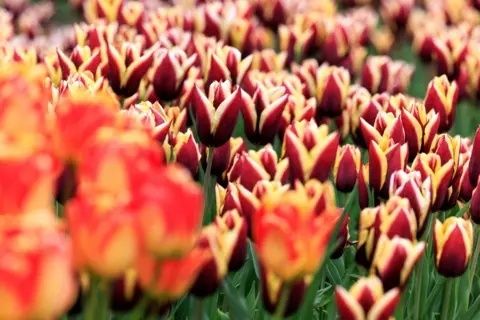
Inside the Botanical Tug of War Between Seed and Starch
After the petals collapse, the most important structure is no longer the colorful flower but the carpel at its base. Inside this swollen tissue, fertilized ovules can develop into seeds. The seed capsule may look modest at first, but it becomes a powerful resource sink as it enlarges. Water, minerals, sugars, and newly manufactured carbohydrates are directed toward the developing reproductive tissues, particularly when pollination has taken place.
That preference is built into the plant”s evolutionary program. A tulip has no knowledge that a gardener wants the same bulb to flower next spring. Its immediate biological priority is sexual reproduction: mature seed can establish new plants and spread genetic material. Perennial survival is important, but the plant cannot guarantee that the original bulb will remain in a favorable site. As a result, a neglected seed head can draw resources at precisely the time the bulb should be replenishing its storage tissue and preparing the next floral bud.
The bulb itself is a compact storage system. Its fleshy scales hold carbohydrates that support dormancy, root activity, and the early growth of the next shoot. When a seed capsule becomes the dominant sink, less of the leaf-produced carbohydrate is available for the basal bulb and the developing daughter bulbs around it. This does not mean that every seed head will permanently ruin a tulip, but repeated seed production can contribute to smaller bulbs, weaker stems, and a reduced flower display. The same principle appears throughout ornamental gardening. Selective removal of spent structures manages where a plant invests its limited resources. Guidance on pruning roses and managing growth likewise emphasizes timing, clean technique, and the removal of tissues that compete with the desired structure.
For tulips, deadheading is not simply cosmetic. It is a way to remove an avoidable sink while the leaves remain active. The University of Illinois Extension advises removing spent spring-bulb flowers but keeping the foliage intact until it naturally declines. That distinction is essential: decapitate the ovary, not the solar panels.
Energy Fate in Post-Bloom Tulips
When a seed head is left untouched, the post-bloom tulip continues allocating resources toward capsule enlargement and seed maturation. The leaves still photosynthesize, but a greater share of the resulting sugars is drawn toward reproduction above ground. The bulb may still survive, particularly in rich soil and a favorable season, but it has less opportunity to accumulate starch, initiate strong daughter bulbs, and complete the embryonic flower inside the replacement bulb.
When the spent head is removed, the immediate reproductive drain is reduced. The leaves continue collecting sunlight, converting it into sugars, and transporting those products toward storage tissue. Over the weeks of early summer, that energy supports bulb thickening, daughter-bulb development, and the formation of next spring”s flower structures. Results still depend on cultivar, climate, drainage, disease pressure, and the bulb”s original quality. Many border tulips do not naturalize reliably even with excellent care, while species tulips and some Darwin Hybrid, Fosteriana, and Greigii types are more likely to return and multiply.
| Post-bloom choice | Likely biological outcome | What the gardener may notice |
|---|---|---|
| Seed head left to mature | Carbohydrates continue supporting the ovary and developing seeds | Bulb replenishment may be reduced, with weaker offsets or smaller future flowers |
| Seed head removed while leaves remain green | More leaf-produced carbohydrate is available for storage and floral development | Better bulb strength and improved prospects for a repeat display |
| Flower and green foliage removed together | Photosynthetic income stops before the bulb is fully recharged | Leaves may disappear neatly, but next year”s flower can be weak or absent |
| Leaves allowed to yellow and dry naturally | Seasonal transfer into storage is completed before dormancy | Bulbs enter summer rest with the best reserves available |
The Anatomy of the Snap Technique
For a single tulip, thumb and forefinger are usually all that is needed. Snapping avoids carrying a blade from one plant to the next, and it makes the task quick enough to complete across a whole bed during the short window after the petals fall. Shears are not inherently unsuitable, especially when many stems must be treated, but tools should be clean and sharp. A dirty or damaged cut can spread pathogens between plants, while a crushed stem leaves ragged tissue that dries slowly in wet weather.
Look directly below the seed pod, where the flower”s swollen base narrows into the stem. The natural separation zone is generally found just beneath this pod, above the green leaves. The objective is to remove the developing fruit while preserving as much healthy stem and every leaf as possible. Do not pull at the foliage or twist the stem against the bulb, because unnecessary movement can damage tissues that are still transporting water and carbohydrates.
- Wait until the petals have fallen or are clearly collapsing, then inspect the top of the stem for a swelling seed capsule.
- Place the thumb and forefinger immediately below the capsule, at the narrow section where the flower structure meets the stem.
- Make a crisp sideways snap or pinch through the spent flower base. Avoid crushing the remaining stem and do not bend the foliage.
- Leave the green stem and leaves standing. Remove only the seed-bearing top unless disease or physical damage requires a separate, carefully considered cut.
- Collect removed capsules if the bed must remain tidy, and wash hands or gloves after handling tulip material, particularly if skin is sensitive to bulb sap.
Seed may be retained deliberately when breeding or raising new varieties is the goal. Seed-grown tulips can take several years to flower and may not resemble the parent plant, so this is a propagation project rather than the best route to preserving a named cultivar. For dependable repeat performance, remove the capsule and allow the existing bulb to invest in storage. Planting depth, spacing, and drainage still matter later in the year. The Royal Horticultural Society recommends planting most dry tulip bulbs from September to November in well-drained soil, with the pointed end upward and a depth of roughly two to three times the bulb”s height.
Why Green Leaves Must Remain Untouched
Green tulip leaves are solar panels, not untidy leftovers. Their chlorophyll captures light and drives photosynthesis, producing the carbohydrates that refill the bulb after flowering. This is the income that pays for next spring”s shoot, roots, stem, and flower. Removing the leaves while they are still green is equivalent to closing the plant”s energy factory before the storage account is full.
Tying, braiding, folding, or mowing the foliage creates a similar problem. These practices may make a fading bed look neater, but they reduce the leaf area exposed to light and can trap moisture around the stems. Interplanting tulips with later-emerging perennials or annuals is a better way to disguise yellowing foliage. Containers can be moved to a less prominent position while the leaves remain in sunlight, provided the compost does not become waterlogged and the plants are not allowed to dry severely during active growth.
The timing of senescence varies with weather, cultivar, and growing conditions. In a healthy bulb bed, leaves gradually lose their green color, become yellow, and eventually turn brown and crisp. That natural breakdown signals that the main photosynthetic work is complete. Only then should the foliage be removed, gently pulled away, or cut at soil level. Laboratory plant studies, including research available through the plant carbohydrate transport literature, help explain why living leaf tissue remains an important donor system until cellular function declines.
- While leaves are deep green: keep them exposed to sun, water during prolonged dryness, and avoid tying or cutting.
- As leaves begin to yellow: reduce unnecessary disturbance, but allow the remaining green tissue to continue working.
- When leaves are brown and crisp: remove the dead material and clear debris that could shelter pests or disease.
- If foliage collapses unusually early: check for poor drainage, bulb disease, frost injury, nutrient imbalance, or severe drought rather than assuming dormancy is complete.
- For naturalizing plantings: choose suitable varieties, leave bulbs undisturbed where soil drains well, and remember that a perfect aftercare routine cannot make every border cultivar perennial.
Once the foliage has died back, bulbs can remain in the ground if the site is well drained and the cultivar is suited to naturalizing. In heavy or persistently wet soil, lifting and storing may be safer. Allow lifted bulbs to dry in a ventilated, shaded place, discard soft or diseased specimens, and store sound bulbs somewhere cool, dark, dry, and breathable until autumn planting.
Secure Next Spring’s Radiant Canopy Today
The most reliable post-bloom philosophy is simple: snap off the developing ovary, then leave the foliage alone. Removing the seed head prevents a needless investment in seed production, while the green leaves continue turning spring sunlight into starch. That stored energy supports the quiet work hidden below ground, including bulb thickening, daughter-bulb formation, and the gradual completion of the next floral bud.
Early summer dormancy may look uneventful, but it is when the tulip”s future is being secured. Give bulbs the conditions they are asking for, avoid soggy soil, and let the season guide each task. A fleeting display can become a stronger recurring performance when the spent flower is removed at the right moment and the leaves are allowed to finish their work. From bulb to bloom, that small snap is one of the simplest ways to protect next spring”s color.